
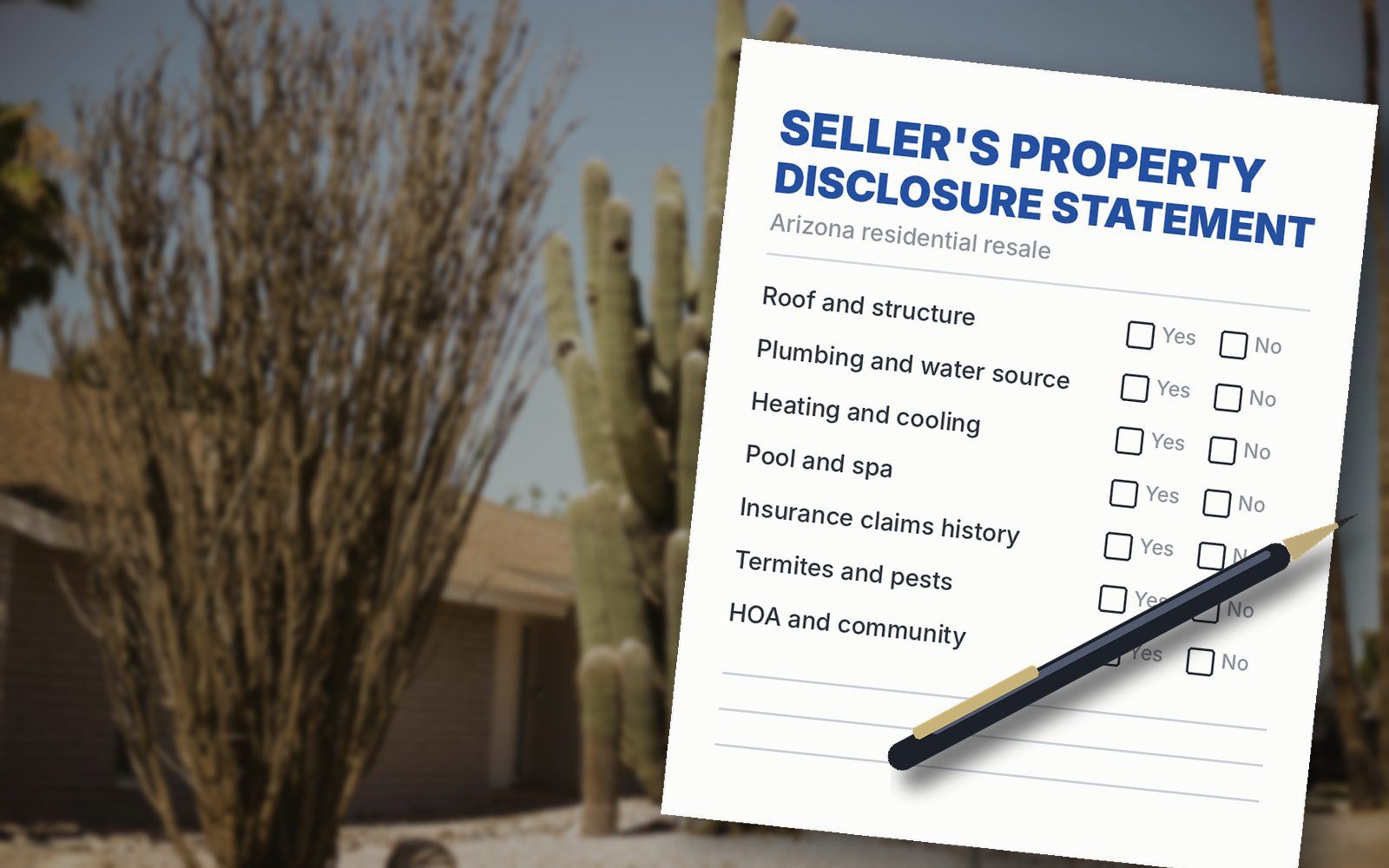
Arizona sellers typically complete a Seller's Property Disclosure Statement, the SPDS, covering what they know about the home: roof, plumbing, electrical, HVAC, pool, pests, past water damage, repairs, insurance claims, and anything else material. Disclosure covers what the seller actually knows, which is why buyers still inspect. Honest, complete disclosure protects sellers from problems after closing and helps buyers focus their inspection. This is general information, not legal advice.
Arizona expects sellers to disclose known material facts about a property's condition, and understanding these requirements protects both sides, sellers from future liability, and buyers from unpleasant surprises. This is general information, not legal advice.
What sellers are generally expected to disclose
Arizona sellers typically complete a Seller's Property Disclosure Statement, called the SPDS, covering known issues with major systems, structural elements, past repairs, environmental hazards, and other material facts affecting the property's value or desirability.
| SPDS topic | Examples of what to think about |
|---|---|
| Ownership and the property | HOA, leased items, liens, boundary issues |
| Building and safety | Roof, foundation, past water damage, pests |
| Utilities and systems | HVAC, plumbing, electrical, water source, septic |
| Pool and spa | Equipment, leaks, the barrier around it |
| Environmental | Flood zone, drainage, soil movement |
| Other | Insurance claims, permits, past repairs |
What "known" actually means
Disclosure obligations generally apply to what the seller actually knows, not what a professional inspection might later reveal. This is why disclosure and inspection work together, one relies on the seller's honesty and awareness, the other on independent professional assessment.
Common items Arizona sellers should address
Past water damage, foundation issues, HVAC or roof age and history, pool equipment condition, and any known pest issues are common disclosure items for Arizona homes worth thinking through carefully before listing.
A few more that come up here often: a leased or financed solar system, termite treatments and the warranty that came with them, past roof leaks during monsoon season, and any unpermitted additions or conversions. If you have records, gather them. A disclosed problem with a receipt behind it is far easier to negotiate than a surprise.
Insurance claims history
Buyers in Arizona often ask for the insurance claims history on a home, because it can affect what their own insurance costs. If you've filed claims, be ready to disclose them accurately.
What Arizona law says you don't have to disclose
Arizona law lists a few things a seller and their agent generally can't be held liable for not disclosing, including that a death occurred on the property. You can read the full list in A.R.S. 32-2156. That law limits liability for failing to disclose. It doesn't allow a seller to lie when asked a direct question, and it doesn't cover the condition of the home itself. If you're unsure about something specific, talk with a real estate attorney.
When something changes after you sign
The SPDS isn't a one time form. If you learn something new before closing, like a new roof leak after a monsoon storm or a notice from the HOA, the contract expects you to tell the buyer in writing. Updating the disclosure right away keeps a small problem from turning into a bigger one at the walkthrough.
If you never lived in the home
If you inherited the home, own it as a rental, or are selling for someone else, you may know very little about its history. That's okay. You answer based on what you actually know, and you can say you never lived there. What you can't do is leave out something you're aware of. See Selling an inherited house.
Why honest disclosure protects sellers
Sellers sometimes worry disclosure will scare off buyers, but the opposite is usually true for the sale's long term health, thorough, honest disclosure reduces the risk of a buyer discovering an undisclosed issue after closing and pursuing legal action.
When in doubt, disclose it. A problem disclosed up front is a negotiation. A problem discovered after closing can become a legal problem.
What buyers should do with disclosure information
Buyers should read the disclosure statement carefully and use it to guide inspection focus areas, if a seller discloses a past roof leak, for example, that's worth specific attention during inspection, even if it was reportedly repaired. See What to expect during an Arizona home inspection.
Other disclosures you may see
Depending on the home, you may also see an HOA disclosure package, a lead based paint disclosure on homes built before 1978, and disclosures tied to solar, wells or septic systems.
The Arizona Buyer Advisory
Buyers in Arizona are often given the Arizona Buyer Advisory, a document from the Arizona Association of REALTORS that walks through what to research before buying, from flood zones to soil conditions to nearby airports and more. Read it alongside the SPDS. Together they help you decide what to inspect, what to ask and what to look up yourself.
Questions buyers should ask about the SPDS
1 - Was this repair done by a licensed contractor, and are there receipts?
2 - Has the home had any insurance claims, and what were they for?
3 - Are there any known permits that were never finished or closed?
4 - Is anything on the property leased or financed, like solar panels or a water softener?
5 - Has anything changed since the seller filled out the form?
Ask in writing through your agent, so the answers become part of your file.
The bottom line
Whether you're disclosing or reviewing a disclosure, I'll make sure you understand exactly what it means and how to act on it.
Let's take the confusion out of this decision, schedule your clarity call today.
Questions, answered.
Is seller disclosure required in Arizona?
Arizona law and the standard purchase contract expect sellers to disclose known material facts, and the SPDS is the standard way it's done. Your agent and, if needed, a real estate attorney can clarify specifics for your transaction.
What happens if a seller fails to disclose a known issue?
This can potentially expose the seller to legal liability after closing, which is exactly why thorough, honest disclosure protects sellers as much as buyers.
Does disclosure replace the need for an inspection?
No, disclosure reflects what the seller knows, while an inspection provides an independent professional assessment. Both matter and serve different purposes.
What is the SPDS?
The Seller's Property Disclosure Statement is the standard form Arizona sellers use to disclose what they know about the home's condition and history.
Do I have to disclose repairs I already made?
Past repairs are generally worth disclosing, especially for roofs, plumbing leaks and anything structural. Include the receipts if you have them.
Want to talk it through?
Bring me the specifics of your situation and I will tell you straight what I would do. No pitch, nothing to sign, and no obligation to work with me afterward.
Ask me about disclosure